NEW ARRIVALS
Magick, Grimoires, Alchemy, Hermetica, and more
[SPARE, Austin Osman] The Book of Pleasure (Self-Love); The Psychology of Ecstasy
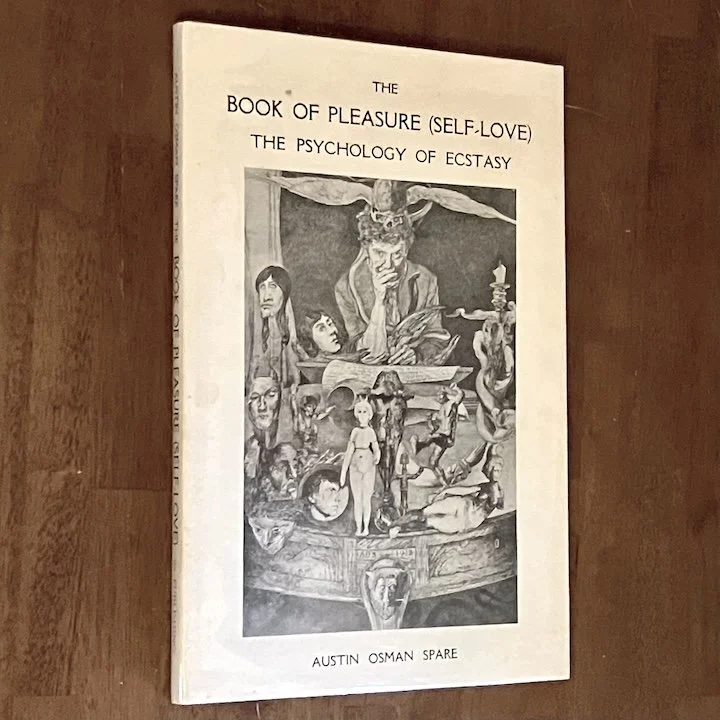
[SPARE, Austin Osman] The Book of Pleasure (Self-Love); The Psychology of Ecstasy
Foreword by Kenneth Grant
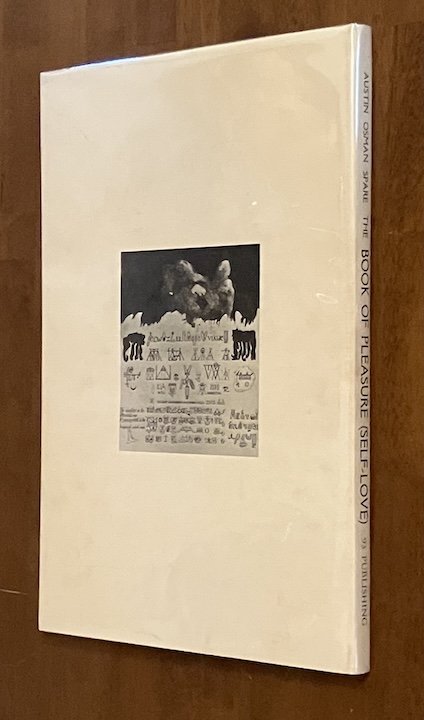
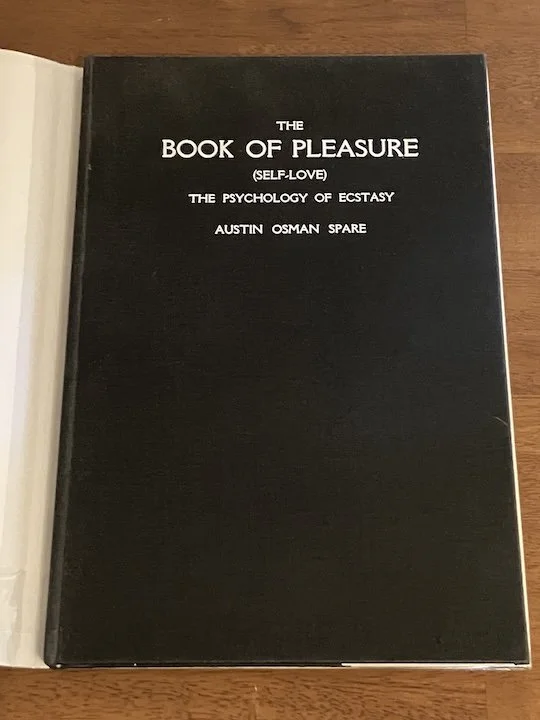
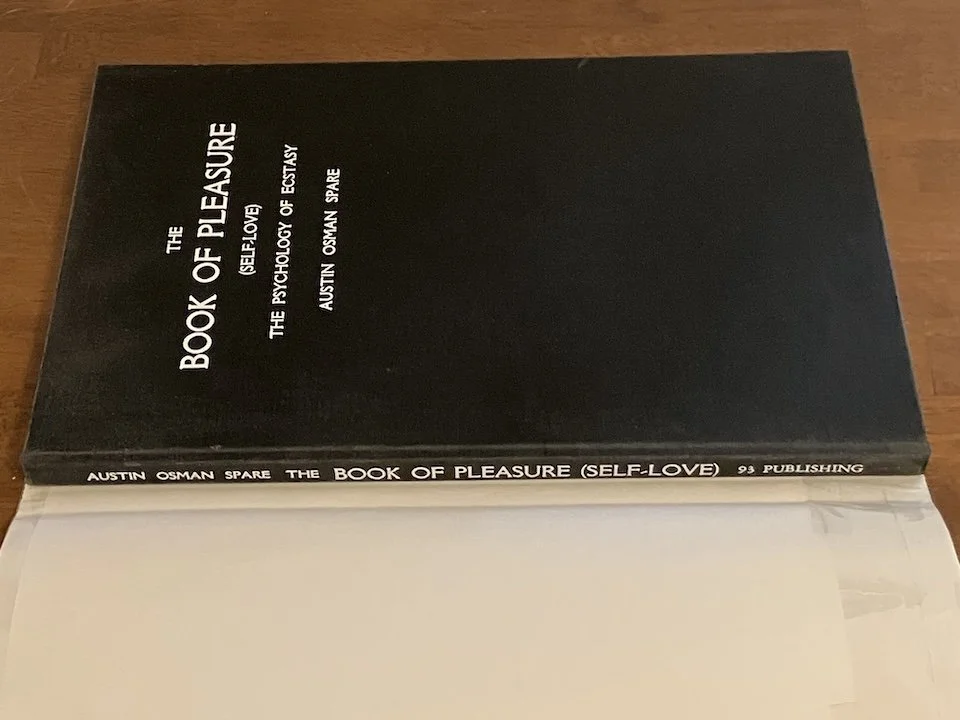
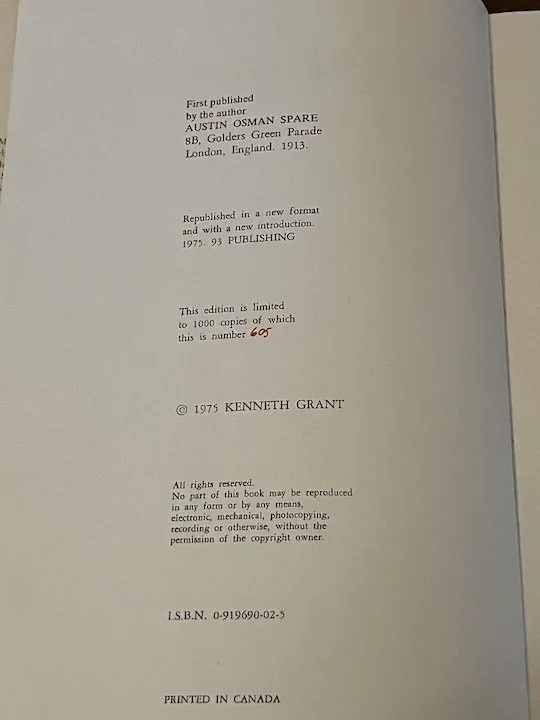
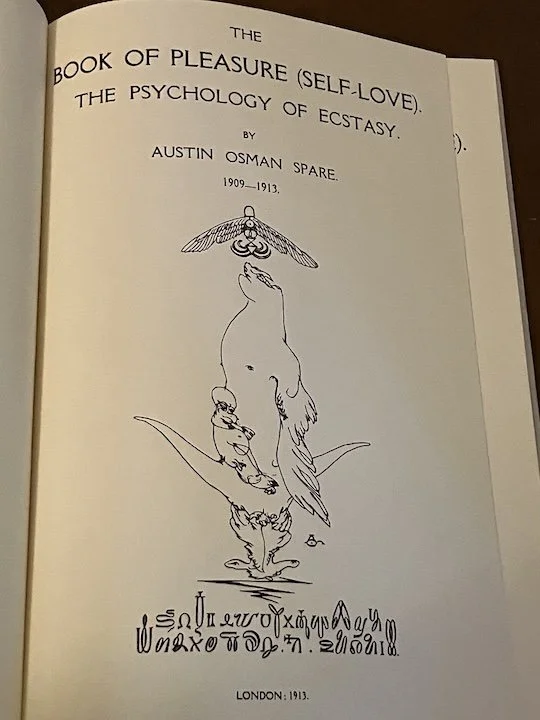
Montreal: 93 Publishing, 1975. First Edition Thus. Hardcover. Folio (measures 10 x 15.5 inches). Limited to 1000 numbered copies. This is copy No. 605. Bound in black cloth with white titles to front and spine. [8] + 60 pages. Illustrated throughout with black and white plates and line drawings by Spare. Includes a new foreword by Kenneth Grant. One of the best copies we have seen of this edition in a long time. About fine in a near fine dust jacket.
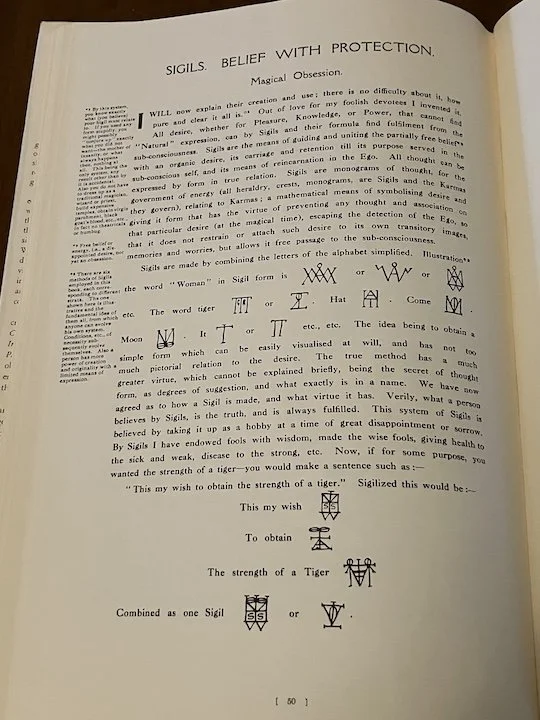
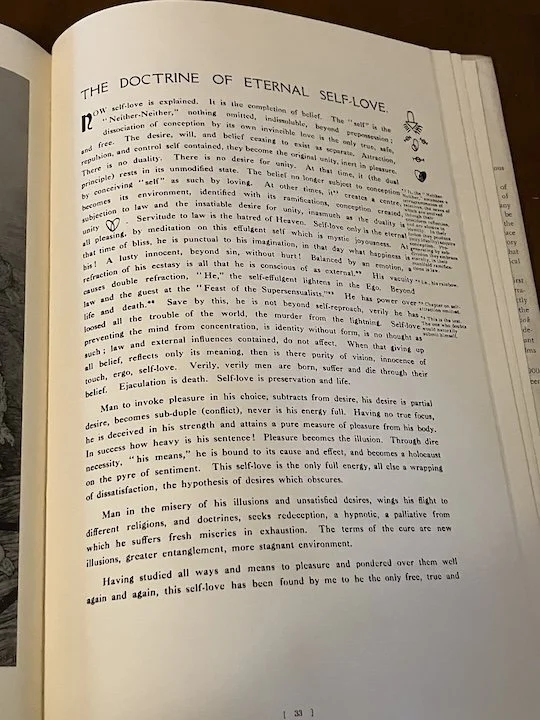
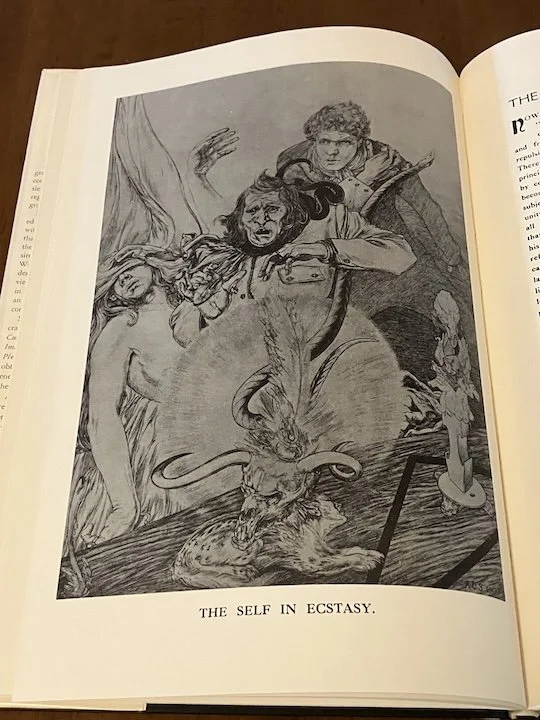
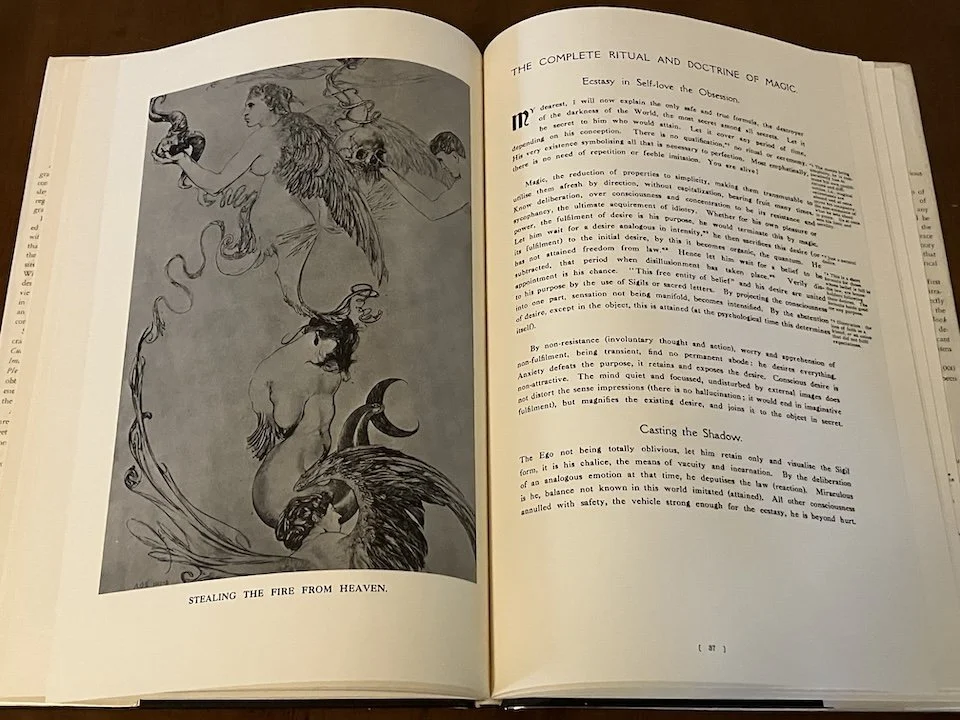
Spare’s most important and influential book which established him as one of the most formidable and unique figures of twentieth century occultism. In this work Spare lays out his philosophical doctrine of the Kia, his name for a particular state representing the ultimate reality whose nature is emptiness — the non-existent source of all manifest phenomena. Similar ideas can be found in Taoism and within the Vajrayana Tantric Buddhism of Tibet. Utilizing the practice of what Spare calls the “Death Posture” is one way to become aware of this Kia-state. This practice, and Spare’s “Neither-Neither” approach, are designed to instigate the cessation of thought, leading to a state of “otherness.” One of the most important sections of The Book of Pleasure is Spare’s system of the creation and use of sigils as a means of working magic by communicating with the dormant powers of the subconscious mind. Spare also discusses his personal magical alphabet (the Alphabet of Desire, each letter representing a sex principle), and his theories on “atavistic resurgence.” Unlike some other influential works of 20th century occultism, e.g., Crowley’s Liber AL and Gardner’s The Book of Shadows, Spare’s intention in writing the book was not to establish the founding of a cult or magical order, but rather to present his own personal magical system and encourage his readers to think for themselves and to investigate their own beliefs. Over time, however, the book did have an important influence on the Western esoteric tradition that later came to be known as Chaos Magic. This work is beautifully executed with full page symbolist illustrations that represent some of Spare’s most corrosive and beautiful draughtsmanship. Spectacular examples of his automatic drawings and sigils are also present. First published in 1913, it remains one of the most unique magical works of the 20th century.