Music & The Performing Arts
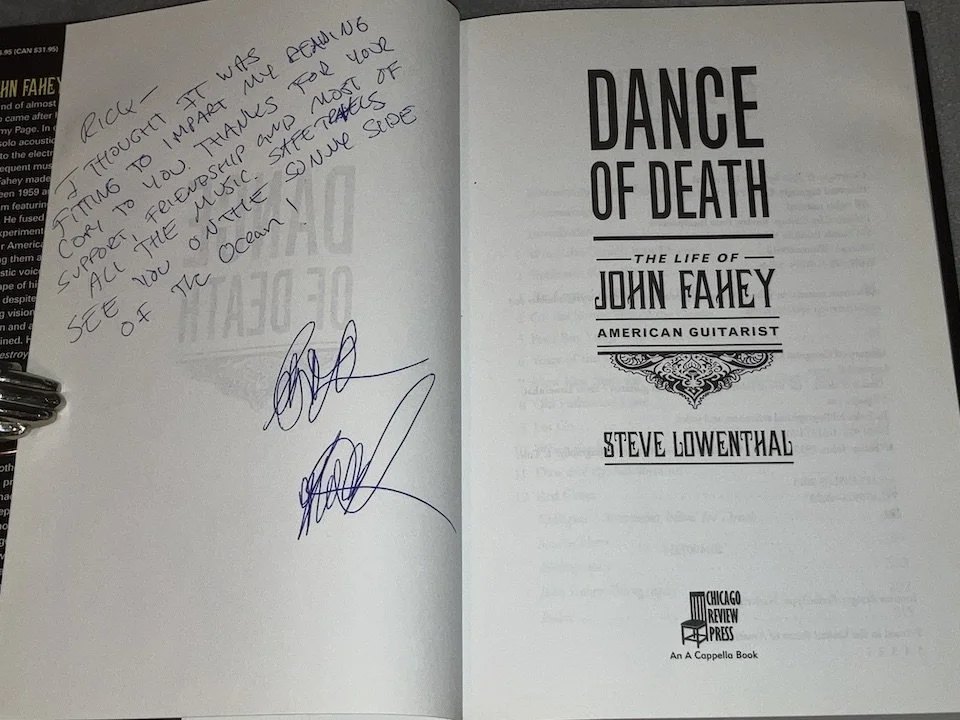
[LOWENTHAL, Steve] Dance of Death. The Life of John Fahey, American Guitarist (Inscribed Author's Copy)




[LOWENTHAL, Steve] Dance of Death. The Life of John Fahey, American Guitarist (Inscribed Author's Copy)
Foreword by David Fricke
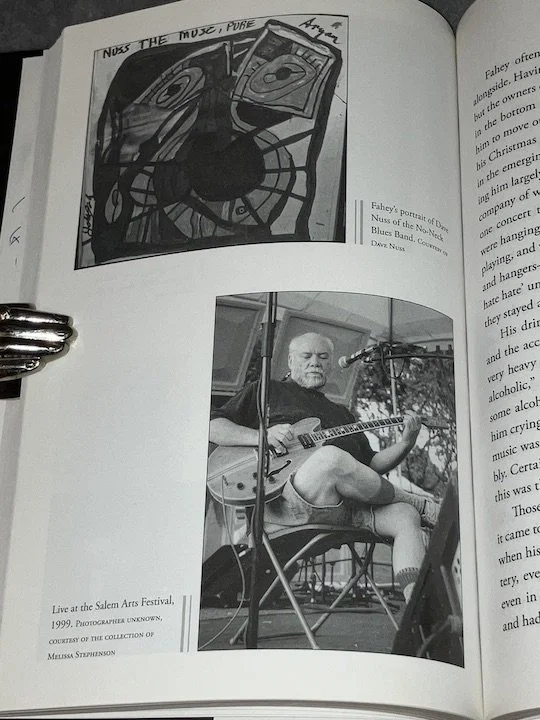
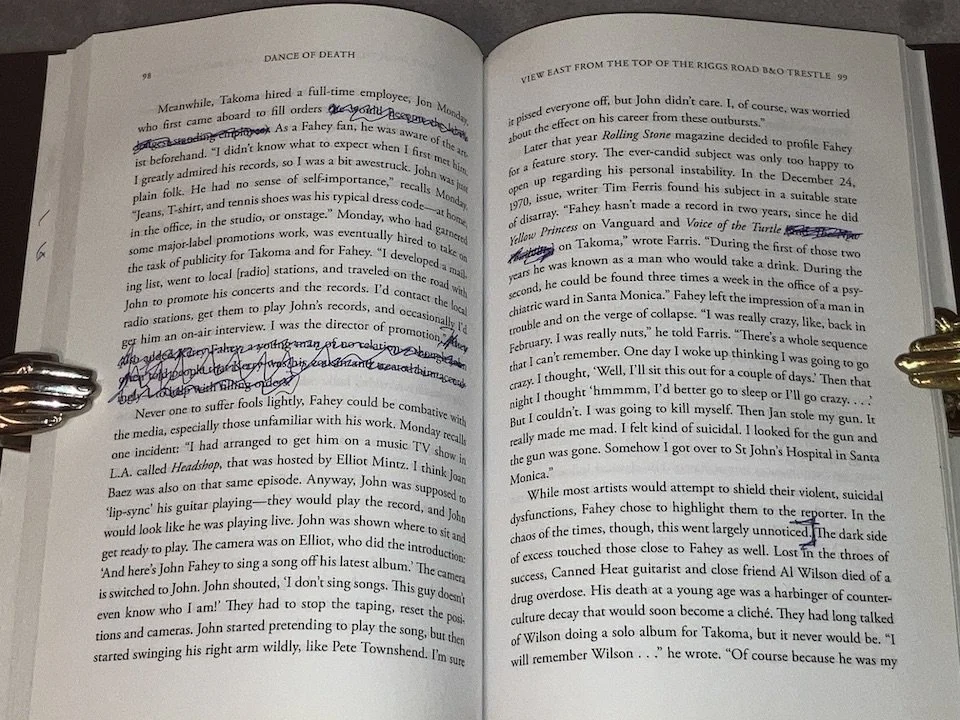
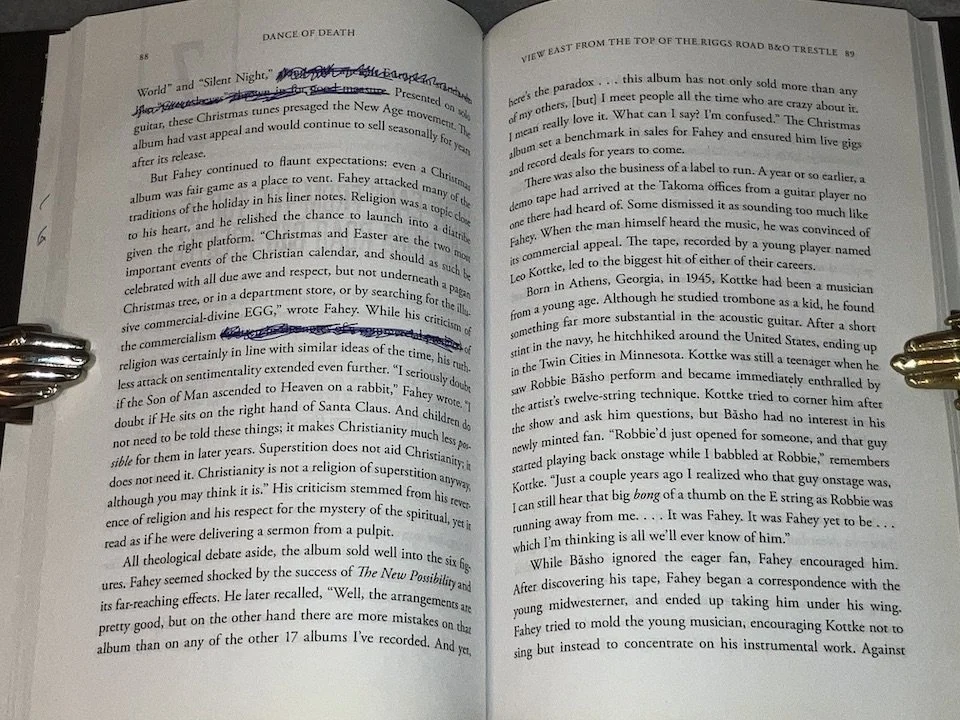
Chicago: Chicago Review Press, 2014. First Edition, First Printing. Hardcover. Octavo. 221pp. Author’s reading copy, Inscribed to guitarist Richard Bishop: “Rick - I thought it was fitting to impart my reading copy to you. Thanks for your support, friendship and most of all the music. Safe Travels. See you on the Sunny Side of the Ocean! Signed by Steve Lowenthal. With b&w photographs. A few marks in ink by the author including some lines completely crossed out! Otherwise a near fine copy in like dust jacket.
John Fahey hovers ghostlike in the sound of almost every acoustic guitarist who came after him, from Leo Kottke to Jimmy Page. In essence, John Fahey is to the solo acoustic guitar what Jimi Hendrix was to the electric: the man whom all subsequent musicians had to listen to.
Fahey made more than forty albums between 1959 and his death in 2001, most of them featuring only his solo steel-string guitar. He fused elements of folk, blues, and experimental composition, taking familiar American sounds and recontextualizing them as something entirely new. His artistic voice transformed the cultural landscape of his time—and ours.
Yet despite his stature as a groundbreaking visionary, Fahey's intentions—as a man and as an artist—remain largely unexamined. His memoir, How Bluegrass Music Destroyed My Life, was largely fiction; his liner notes were full of half-truths. John Fahey's real story has never been told—until now.
Journalist Steve Lowenthal has spent years researching Fahey's life and music, talking with his producers, his friends, his peers, his wives, his business partners, and many others. He describes how Fahey introduced prewar blues records and the men who made them to a broader public; how his independent label Takoma set new standards; how he battled his demons, including stage fright, alcohol, and prescription pills; how he ended up homeless and mentally unbalanced; and how, despite his troubles, he managed to found a new record label, Revenant, that won Grammys and remains critically revered.
This portrait of a troubled and troubling man in a constant state of creative flux is the compelling story of a great American outcast.